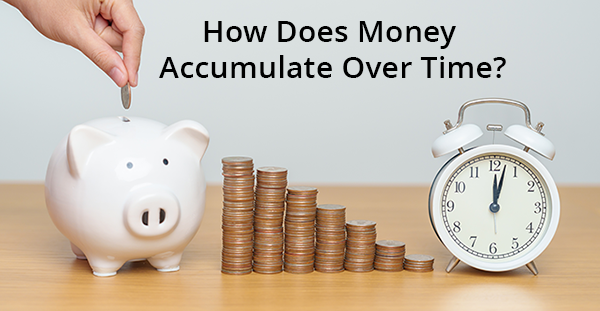
One of the most powerful concepts in personal finance is also one of the simplest. Given enough time, money grows. Understanding how and why that happens can change the way you think about saving and investing, and motivate you to take action sooner rather than later.
The power of compounding
Compounding is the process by which the returns you earn on your money start earning returns of their own. In a savings account, for example, the interest you earn in year one gets added to your balance. In year two, you earn interest on that larger balance, including the interest from the previous year. The longer this continues, the faster your money grows.
This effect is modest in the early years but becomes increasingly powerful over longer time periods. A simple example illustrates this well. If you invest £10,000 and it grows at 5% per year, after 10 years you would have around £16,300. After 30 years, that same £10,000 would have grown to around £43,200, without adding another penny. The growth in the final years dwarfs the growth in the early years, which is why time is such an important ingredient.
Starting early makes a bigger difference than saving more
Many people assume that saving a large amount later in life will make up for not starting sooner. In reality, starting early and saving consistently, even in smaller amounts, tends to produce better outcomes than saving larger amounts over a shorter period.
Someone who invests £200 a month from age 25 will typically end up with significantly more at retirement than someone who invests £400 a month from age 45, even though the second person is contributing twice as much. Time in the market is more valuable than the amount invested, in most cases.
Consistency matters
Regular contributions amplify the compounding effect. Contributing a set amount each month, whether into a pension, ISA, or investment account, means you are continuously adding to the base on which future growth is calculated. It also means you naturally buy more when prices are lower and less when they are higher, a strategy known as pound cost averaging, which helps smooth out the impact of market fluctuations over time.
Reinvesting your returns
If your investments pay dividends or interest, reinvesting those payments rather than withdrawing them accelerates growth significantly. Instead of taking the income out, you are adding it back into your pot, where it continues to compound alongside everything else. Over long periods, the difference between reinvesting and not reinvesting returns can be substantial.
Staying invested through ups and downs
Markets do not move in a straight line. There will be periods where the value of your investments falls, sometimes sharply. The instinct in those moments can be to sell and wait for things to improve, but doing so can mean missing the recovery, which often happens quickly and without warning. Historically, the longer money stays invested in a diversified portfolio, the greater the likelihood of positive returns. Patience and consistency are two of the most underrated qualities in a successful investor.
The bottom line
You do not need to invest large sums to build meaningful wealth over time. You need to start, stay consistent, and give your money time to work. A financial adviser can help you put a plan in place that makes the most of these principles for your specific goals and circumstances.
Contact an Independent Financial Adviser
The value of investments can fall as well as rise, and you may not get back what you originally invested.
Approved by In Partnership FRN 192638 June 2026